Case study
Leaking lead and parapet roof sealed in Whitechapel, London E1
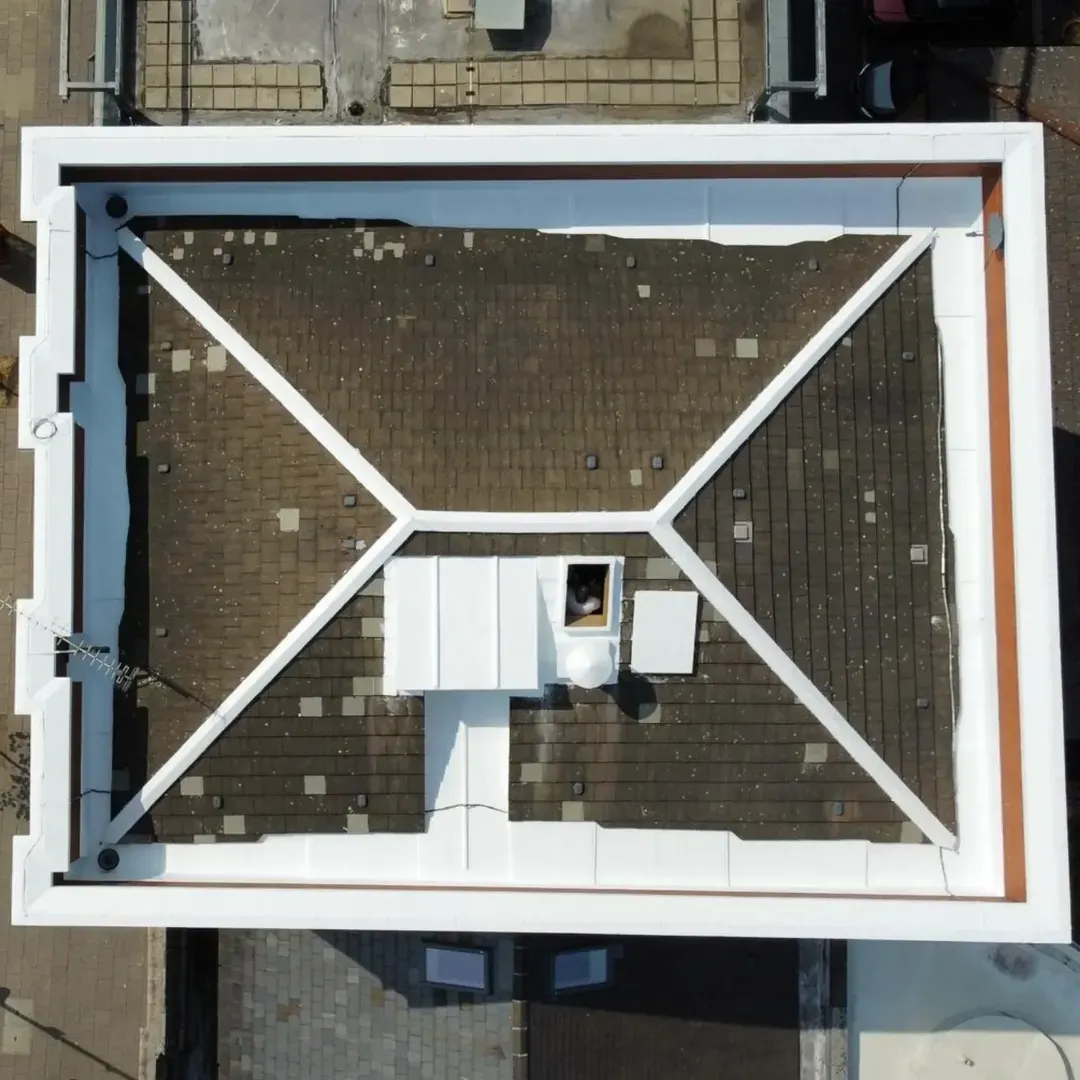
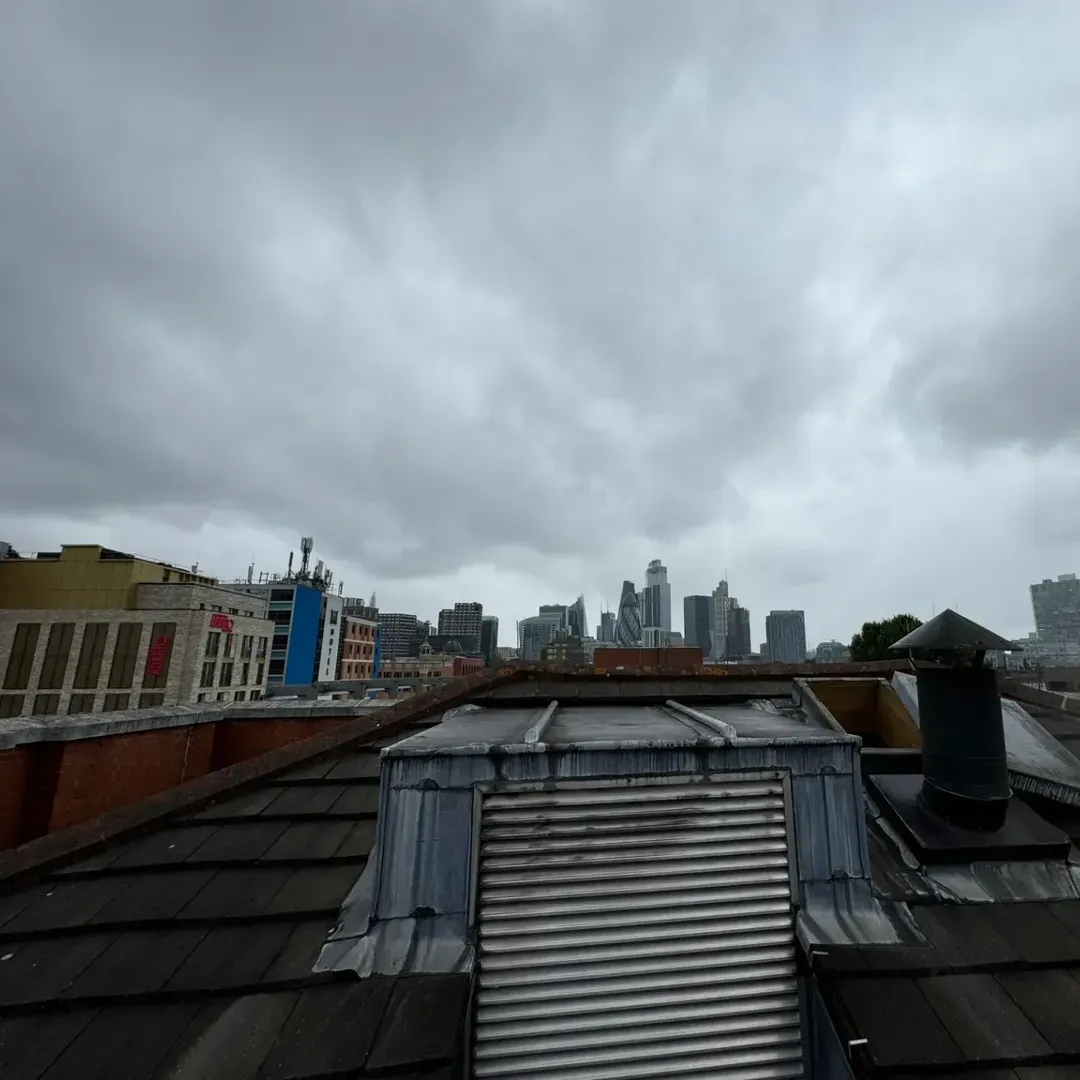
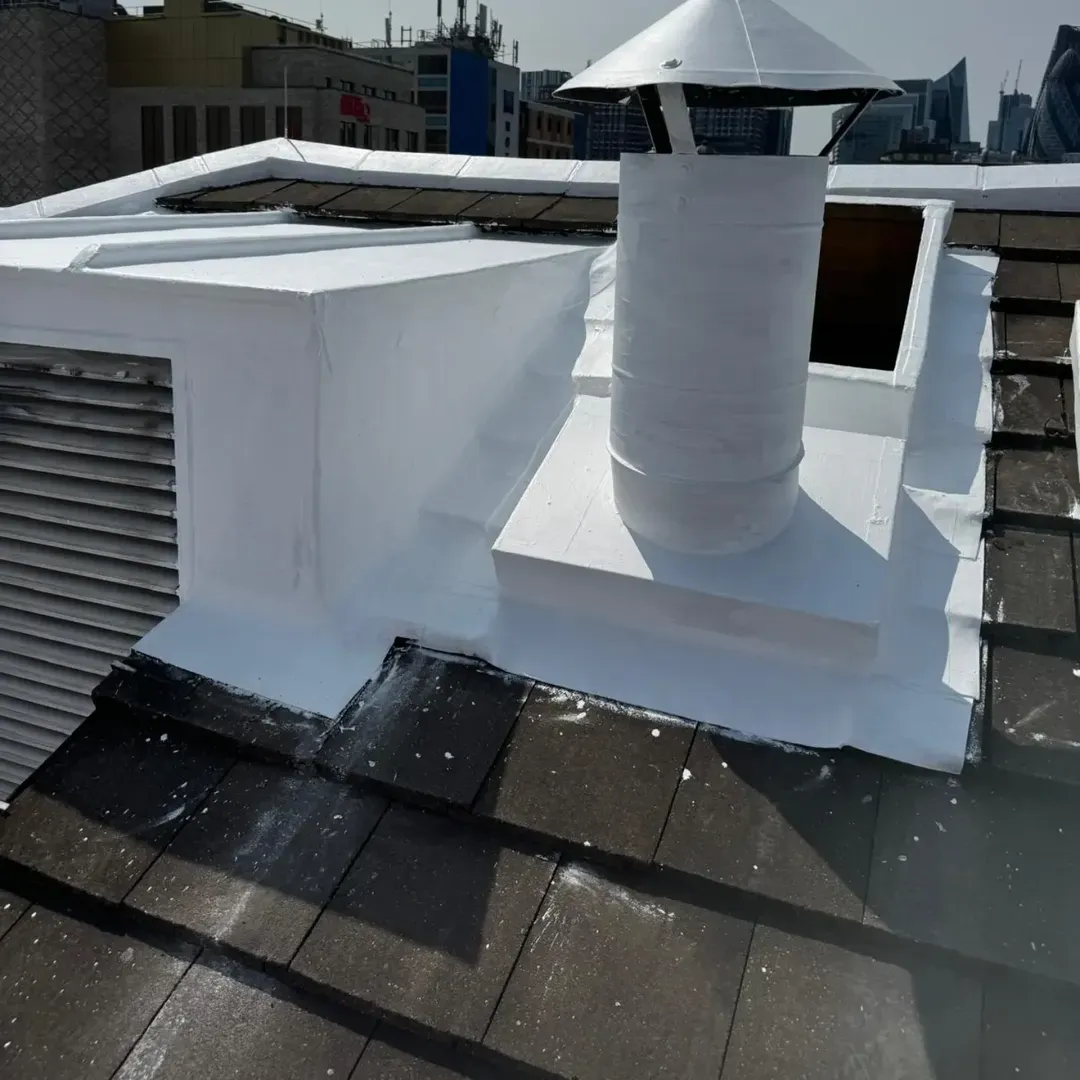
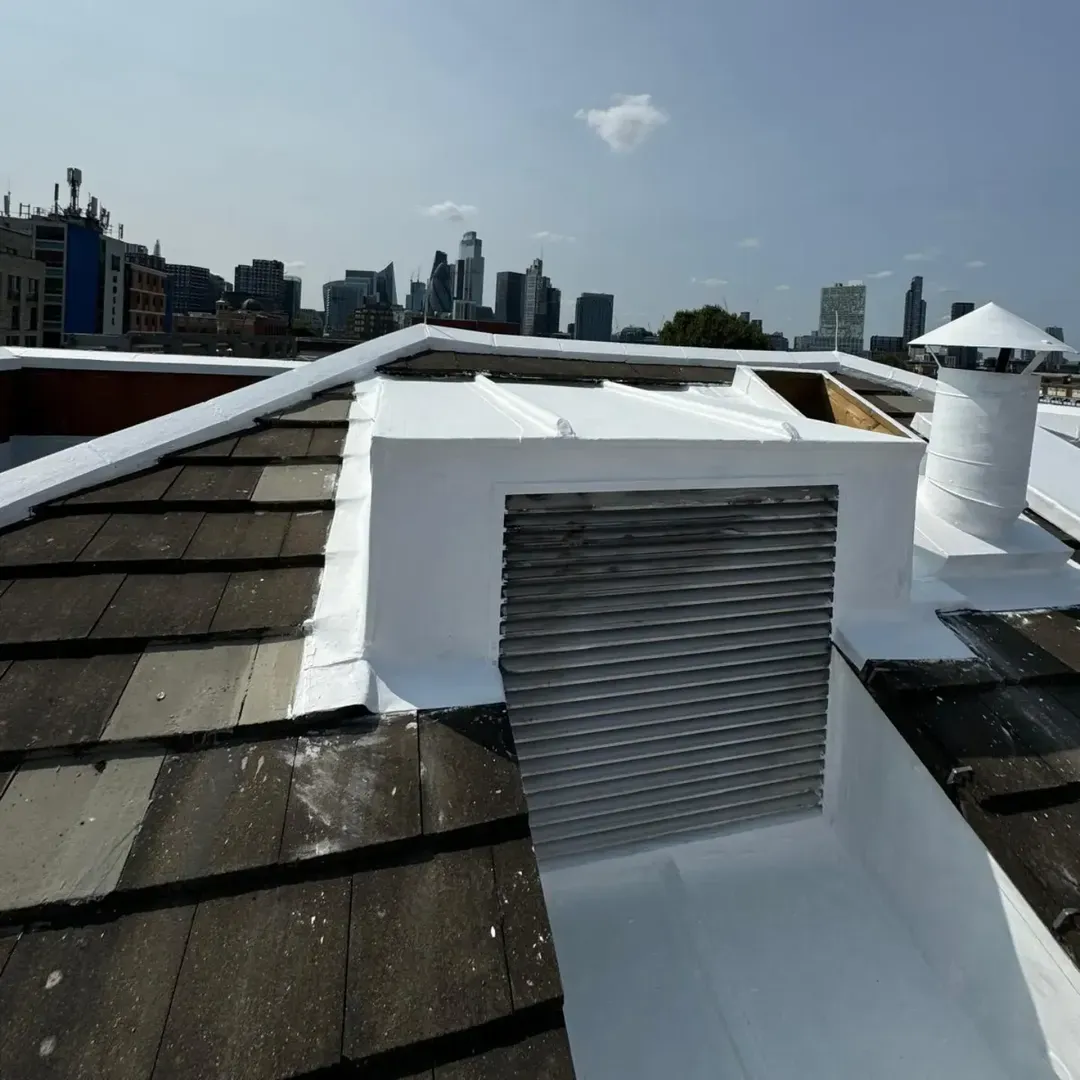
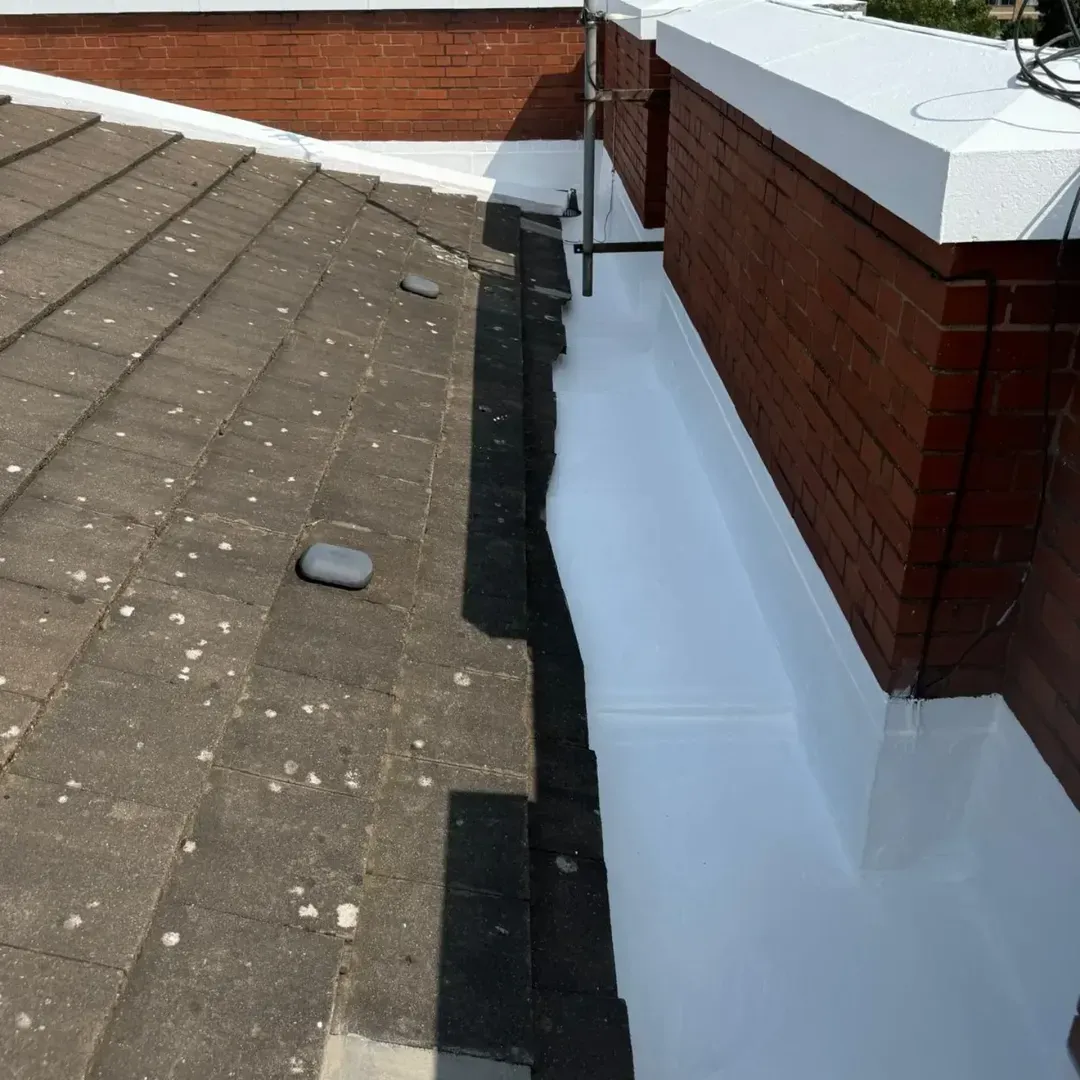
A roof on Whitechapel Road in London E1 was leaking through into the flats below. It is a pitched parapet roof: tiled slopes enclosed by a brick parapet with stone copings, with lead detailing in the valleys and around the upstands. The lead had worn and cracked in several places, water was getting in near the main walls, and the mortar pointing along the copings and ridge had weathered out. The tiled slopes themselves were sound. Rather than strip out the lead or rebuild the parapet, the worn details were repaired and then sealed in the HYDRONYLON® system: the lead, copings, valleys, upstands and ridge details were brought into one continuous white waterproof layer. The leak was stopped, and the work was completed in five working days in August 2024.
At a glance
- Location
- Whitechapel Road, London E1
- Roof
- pitched parapet roof; lead, stone copings, valleys, upstands and ridge details, approx. 78 m² of detailing sealed (63 m² of lead). Tiled slopes left as tile.
- Problem
- water entering the flats below through cracked, worn lead near the main walls, with failed pointing on the copings and ridge
- System
- full HYDRONYLON liquid-applied waterproofing (Primer Emulsion EG, HYDRONYLON HP with Technical Mesh SW-1, white HYDRONYLON HN top coat); HP applied directly to the lead
- Strip-off
- none; no lead replacement and no tear-off (pointing made good, details sealed in the system)
- Duration
- five working days
- Completed
- 18 August 2024
- Installed by
- K & M Roofing Solutions
The challenge
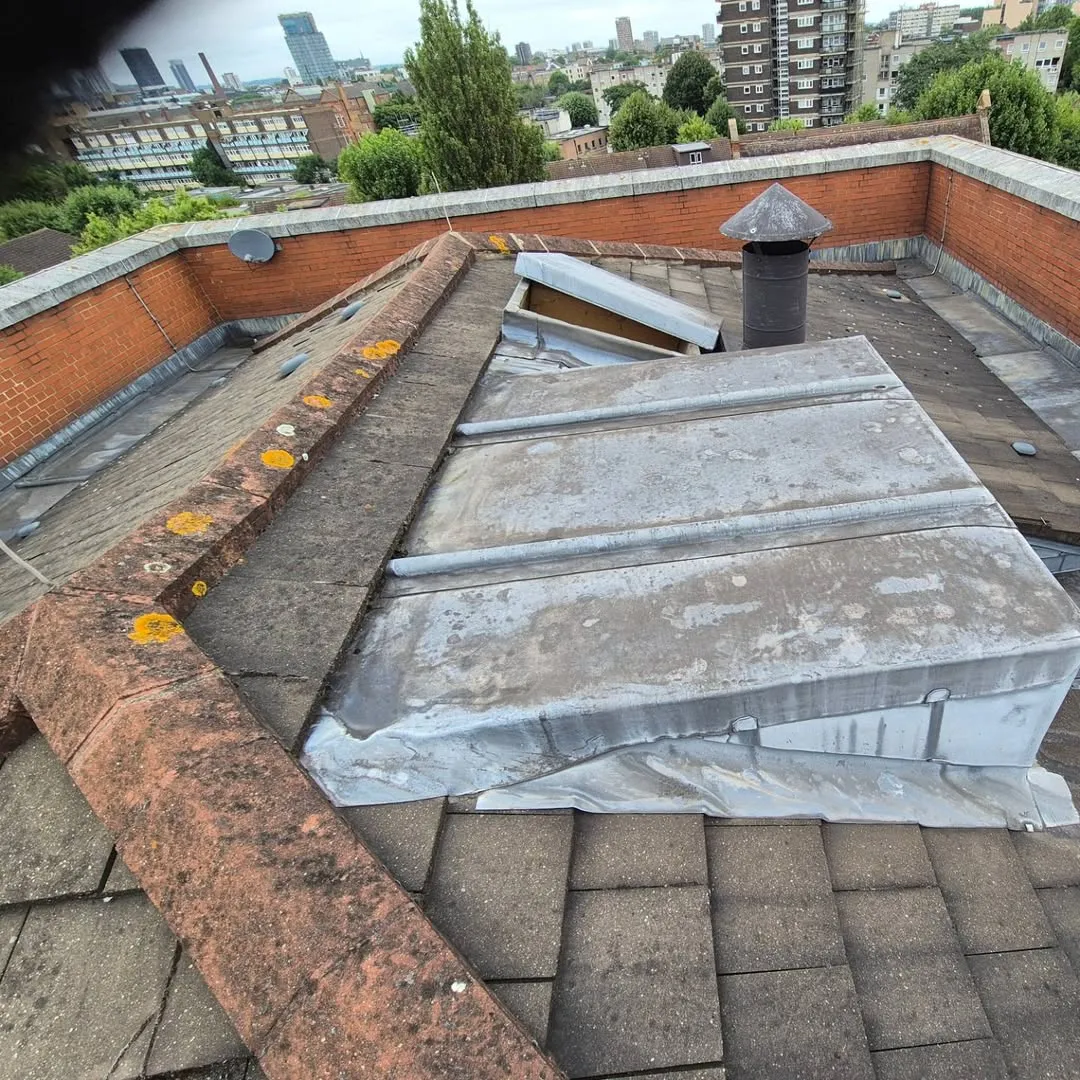
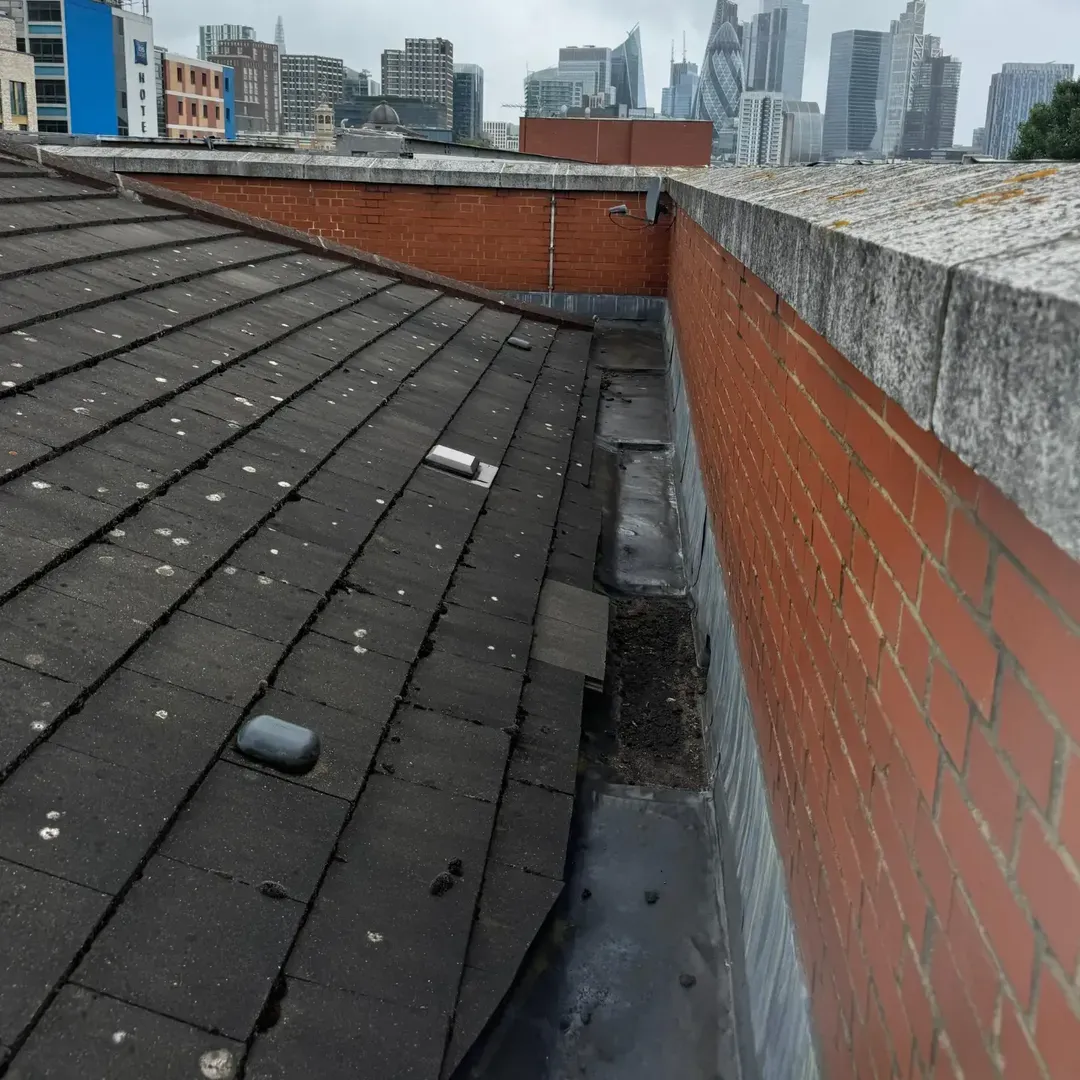
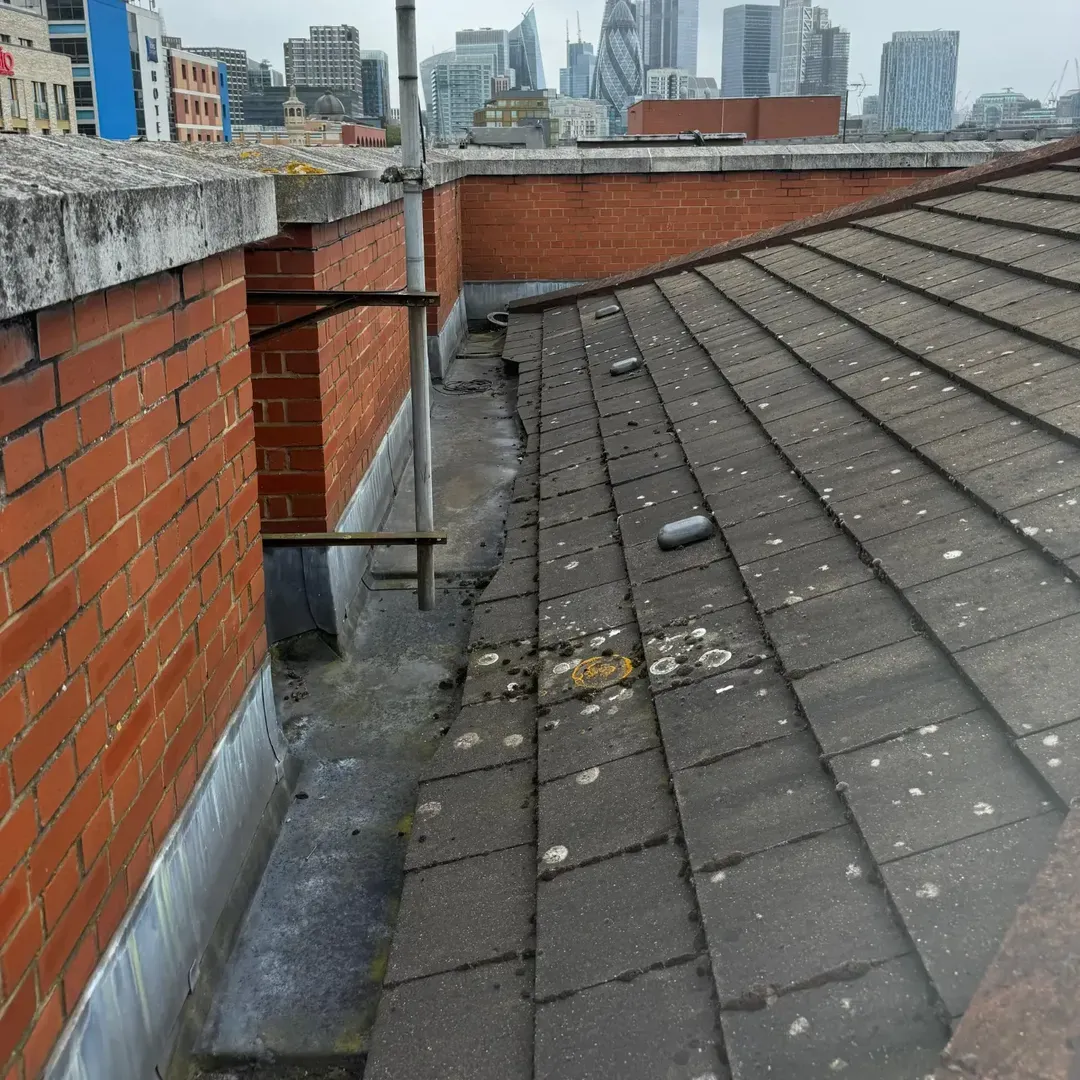
Water was getting into the flats below, showing up near the main walls, but the leak was the visible end of a wider problem. The lead detailing had reached the end of its service life: years of thermal movement had left it worn and split, with old repair patches showing where past spot-fixes had been tried. On a parapet roof the lead carries water at the most exposed points, the valleys and the junctions with the parapet, so once it starts to crack the whole detail is suspect. At the same time the mortar pointing along the stone copings and the ridge had weathered out, opening gaps for water to get behind the parapet, the kind of slow ingress that brings damp to the walls inside. Water that enters at a cracked valley or an open coping joint rarely shows where it gets in; it tracks along the structure and reappears some distance away, which is why patch repairs kept failing. With the tiled slopes still sound, the sensible step was to repair the details and seal the vulnerable lead and masonry in one continuous system, rather than strip out lead that did not need replacing.
The solution
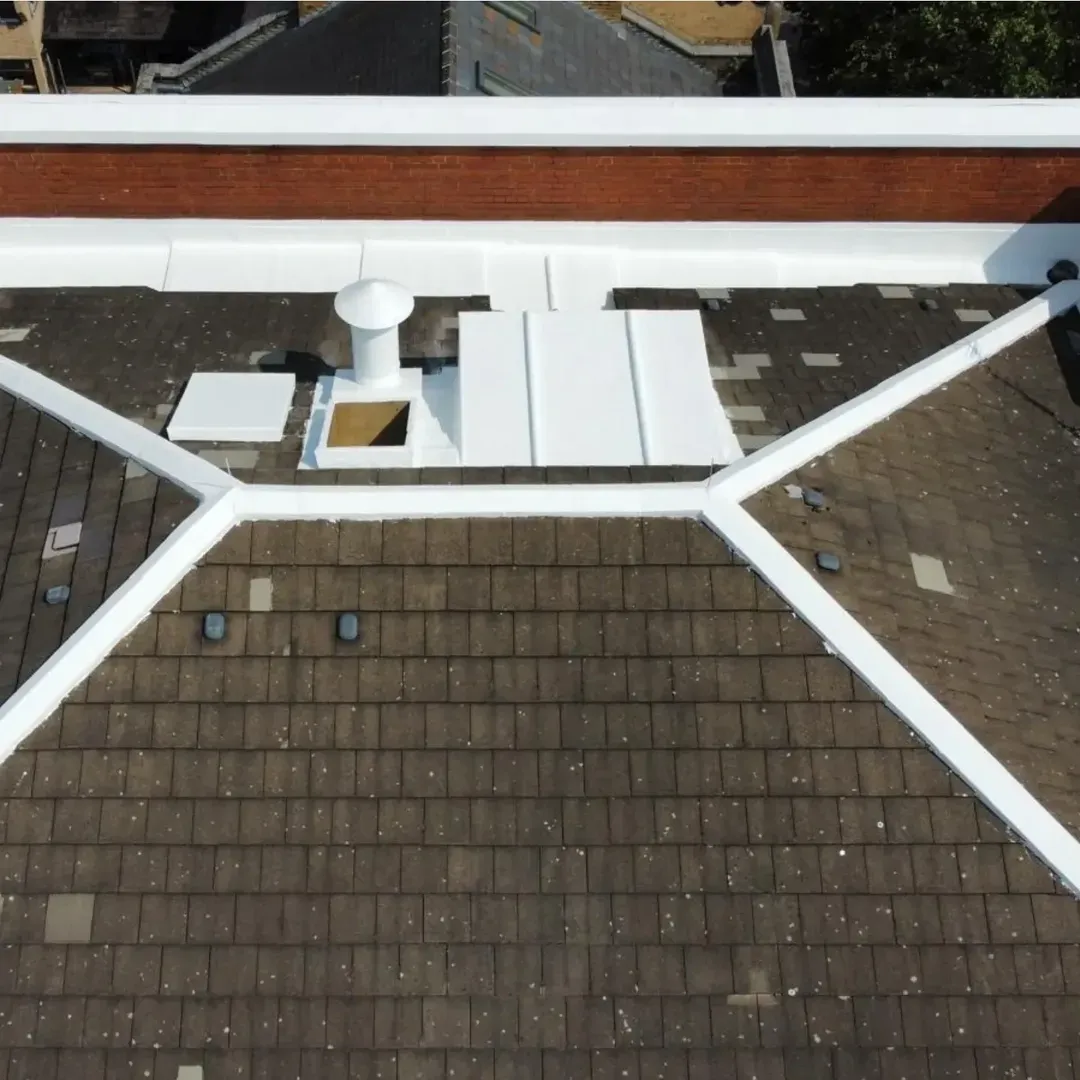
First the roof was made sound: the few damaged tiles were repaired, the moss-covered ventilation tiles were cleaned, the cement to the ridge was made good, and the open joints in the stone copings were filled. The lead and masonry were then cleaned down and prepared. The copings and parapet upstands were primed with HYDRONYLON Primer Emulsion EG, while the lead, a stable surface that does not corrode, took HYDRONYLON HP directly. HP was built up across the details with Technical Mesh SW-1 embedded for reinforcement, carried over the copings, dressed into the valley gutters and turned up every upstand and around the ridge details, then finished with a white HYDRONYLON HN top coat. Each coat was left to cure fully before the next, the work ran cold with no hot works, and the building stayed in use throughout. The tiled slopes were not coated; they were left as tile. The system is liquid-applied and cures into one seamless, fully bonded layer, so the lead splits, coping joints and valley junctions that were letting water in are sealed and reinforced as a single surface; see how the system works.
The result
The lead, copings, valleys, upstands and ridge details are now one seamless white waterproof layer, bonded across around 78 m² of detailing and turned into every junction. The leak into the flats below stopped, and details that were worn out have been given a fresh, fully sealed surface, without the cost and disruption of stripping out lead or rebuilding the parapet. The HYDRONYLON system is assessed under European Technical Assessment ETA-23/0735, and because the work was completed by a HYDRONYLON Approved Contractor it carries a 10-year product guarantee on the materials.
Before and after
Project gallery