
Asphalt flat roof overlay in London
Asphalt flat roofs are common on London's period and mid-century buildings, and mastic asphalt is a hard-wearing material, but its surface does not last forever. With age it crazes, cracks and turns brittle, and once water has found a way through, patching rarely holds for long. The good news is that a sound asphalt roof usually does not have to be stripped off. Where the asphalt has worn on top but is solid underneath, it can be overlaid: a liquid-applied waterproofing system is taken over the existing asphalt and bonds to it, forming one continuous, watertight layer. The system is HYDRONYLON®, supplied by HYDRONYLON LTD and fitted by Approved Contractors across London. Below is what tends to go wrong with ageing asphalt, why overlaying beats stripping it off, and what the work itself involves.
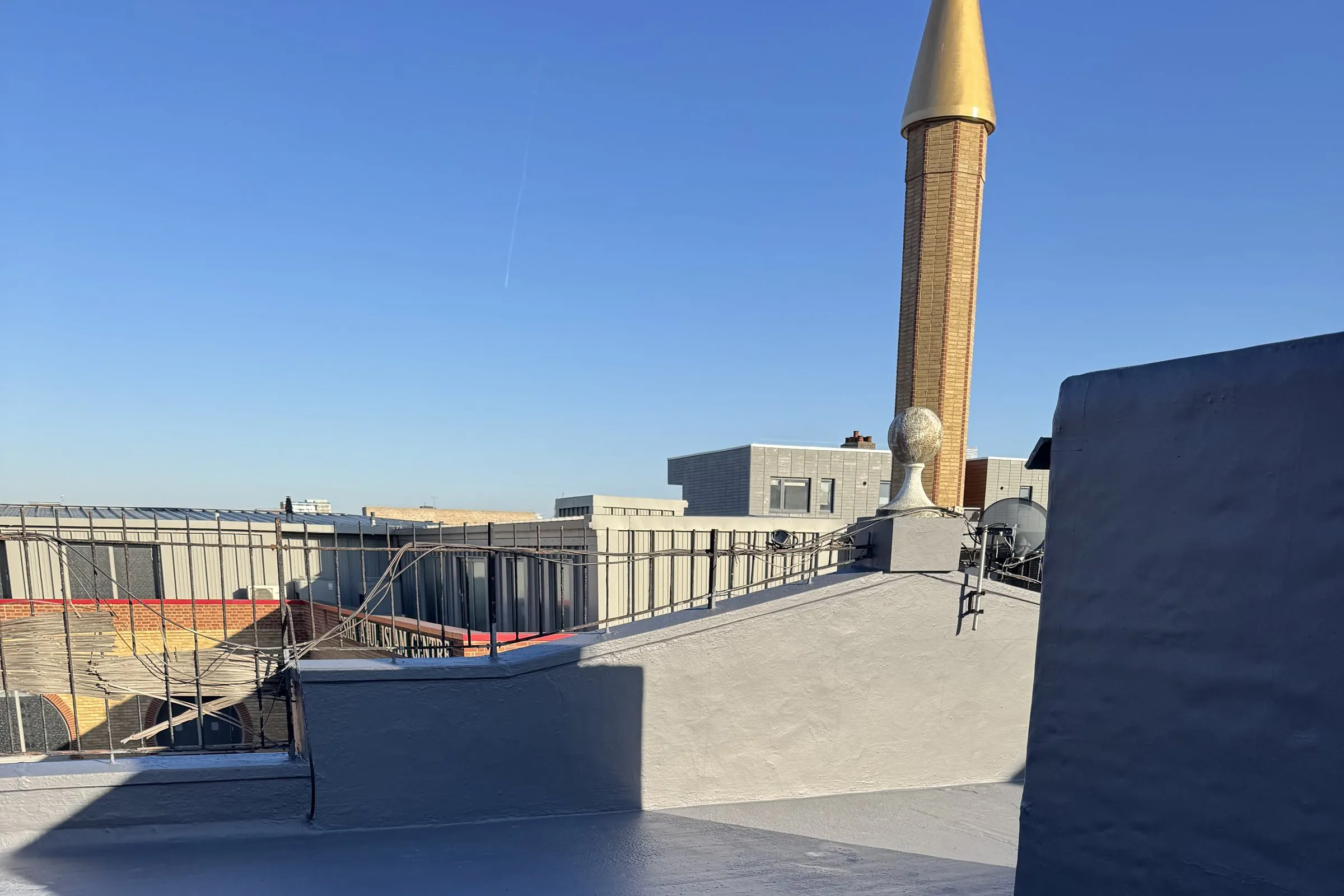
What happens to an asphalt flat roof as it ages
Years of sun, frost and the building’s own movement wear an asphalt roof down, and the signs are usually the same: fine crazing and surface cracking spreading across the roof; blisters where moisture is trapped below the surface; the asphalt hardening until it can no longer flex; and splits opening at the upstands, skirtings and around outlets, which is where asphalt roofs almost always fail first. Water that sits on the roof after rain speeds all of it up. Once the crazing and cracking has spread across most of the roof, sealing one crack at a time no longer holds, because the surface as a whole has reached the end of its life.
The point many owners miss is that reaching this stage does not automatically mean a full re-roof. A worn surface over a sound structure is exactly the roof an overlay is built for.
Why overlay instead of stripping the asphalt off
Taking the old mastic asphalt off completely is heavy, slow work, and it leaves the building exposed while it is done. Where the asphalt has only worn on top but is still firmly bonded, and the structure beneath it is dry, you can avoid all of that. The asphalt is prepared and kept in place, and the liquid system is taken over the whole surface and into every upstand and edge detail, locking the existing roof in under one watertight layer with no laps or joints left to fail. With nothing torn off, there are no skips, no open deck, and a fraction of the upheaval of a full strip-and-replace.
The catch is that the asphalt and the deck have to be genuinely sound for this to work. If the asphalt has lifted and debonded, the structure has shifted, or damp has already tracked into the deck, an overlay would only lock the trouble in, and that has to be put right first. It is the reason the job begins with someone getting up on the roof to look: an Approved Contractor checks the asphalt, the falls and the drainage and tells you plainly whether it is fit to overlay or needs work before anything else.
What an asphalt roof overlay involves
Preparation is most of the job, and on asphalt it counts for more than on almost any other surface. The roof is cleaned back to a sound, stable base, then the asphalt itself is made good: crazed and cracked areas, blisters, and above all the upstands, skirtings and outlets, since those are where an asphalt roof lets go first. A primer chosen for asphalt goes down so the new layer grips the old surface, and only then is the liquid waterproofing applied, reinforced with mesh and carried across the whole roof so it sets into one seamless surface with no joints to fail.
The work is flame-free from start to finish. Nothing is heated and no torch goes near the roof, which is no small thing on a brittle, ageing asphalt surface. Most overlays are a few days’ work, not the weeks a full strip-and-replace can take, and because the asphalt is sealed in place rather than dug out, the building below carries on as normal. There is a bonus, too: a paler finish throws off heat that bare black asphalt soaks up in full sun, which you can read about on our cool roof page.
The system behind the work
HYDRONYLON holds European Technical Assessment ETA-23/0735, and it is the same system whichever surface it goes over. HYDRONYLON LTD supplies it to a network of Approved Contractors, who are trained and certified to fit it and work across London. When one of them overlays an asphalt roof, the materials carry a 10-year product guarantee, held by the contractor who did the work. If you want the detail, the applications page shows how the system is built up surface by surface, and the system page walks through the method.
Recent projects in London
Worn London roofs renewed with the HYDRONYLON system rather than stripped off and replaced.
-
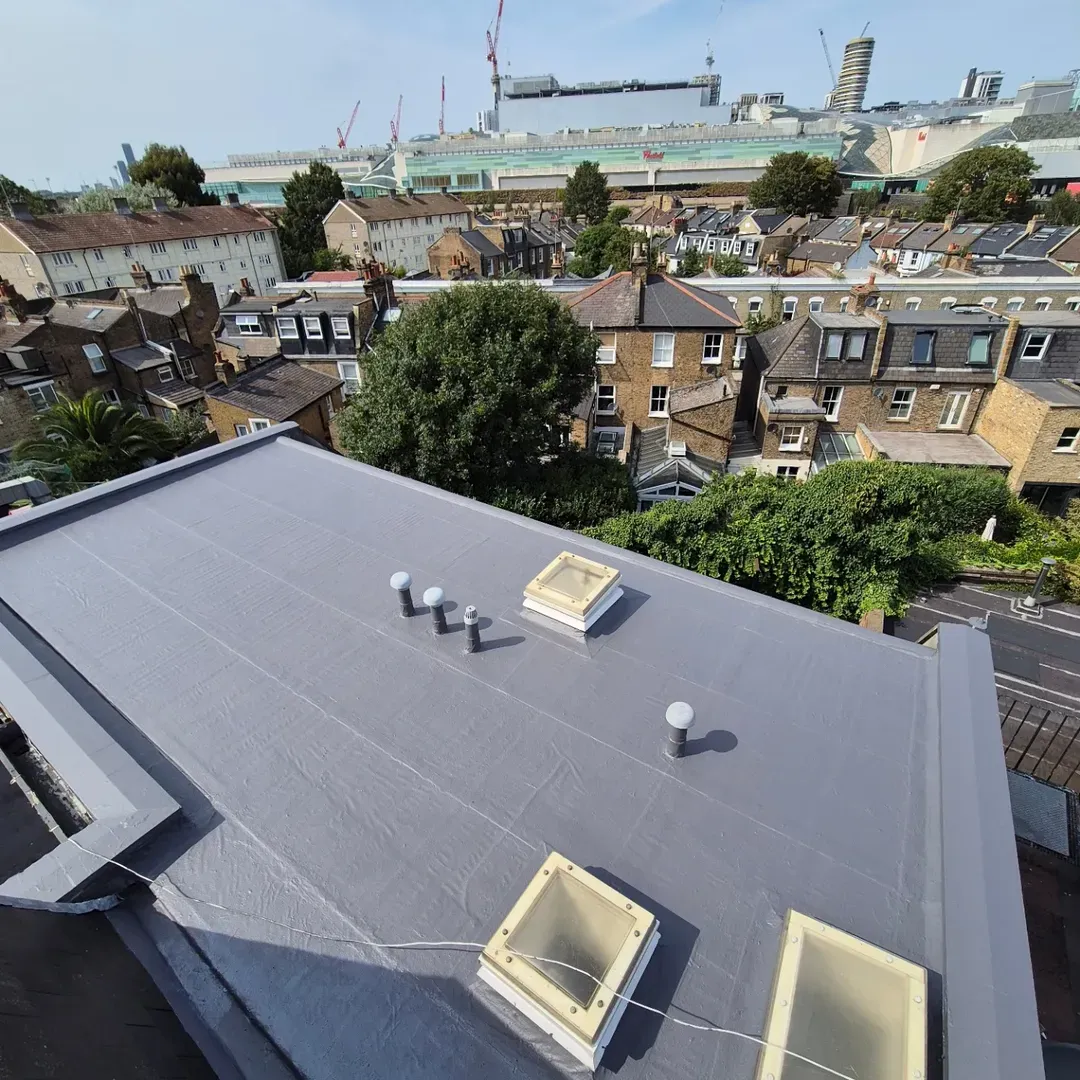 Leaking felt roof sealed in Shepherd's Bush, London W12 Felt · 65 m² · 6 August 2025 A worn felt flat roof in Shepherd's Bush, London W12: all 65 m² sealed with the HYDRONYLON liquid-applied system in four working days, no strip-off. Read case study →
 -
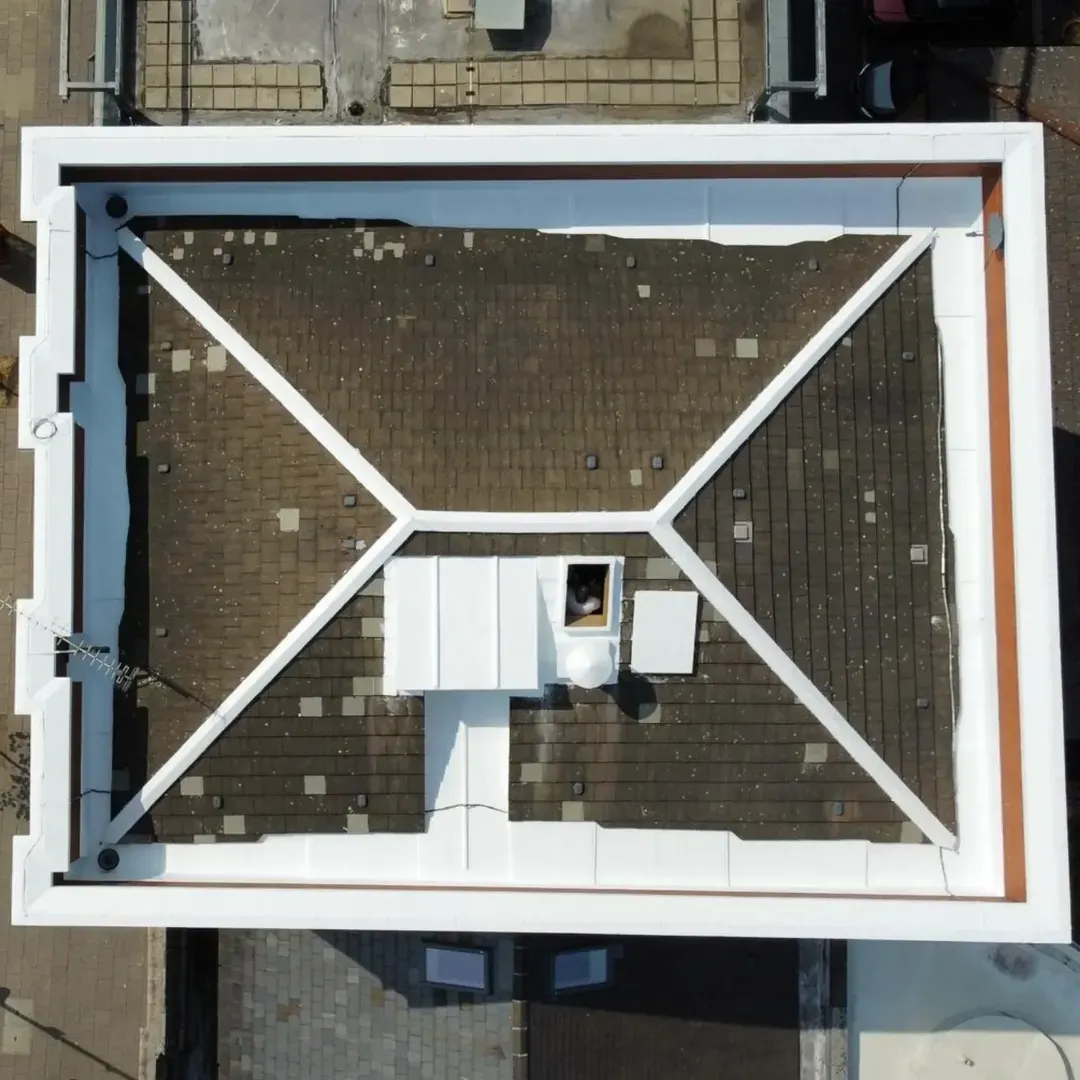 Leaking lead and parapet roof sealed in Whitechapel, London E1 Lead & parapet · 78 m² · 18 August 2024 A leaking lead parapet roof on Whitechapel Road, London E1, sealed with the HYDRONYLON liquid-applied system, with no lead replacement or tear-off. Read case study →
Get a free roof assessment
Leave your details and, if you like, a few photos of your roof. We will get back to you with an assessment. No obligation.
Thank you - we'll be in touch within one working day.
Frequently asked questions
Can an old asphalt flat roof be overlaid, or does it need replacing?
If the asphalt is worn on the surface but still sound and well bonded, and the deck beneath is dry, it can usually be overlaid and sealed rather than stripped off. If the asphalt has debonded or the deck has failed, the structure is put right first. An Approved Contractor confirms which it is during the survey, before any price is set.
What makes asphalt flat roofs crack and craze?
Age and weather. Sun, frost and the building's own movement gradually turn mastic asphalt brittle, so it crazes, cracks and blisters, especially where water sits or at upstands and outlets. Once that has spread across the roof, the surface has reached the end of its life.
Do you strip the old asphalt off?
Not where the asphalt is sound. The whole point of an overlay is that the existing asphalt stays in place and is sealed over with a liquid-applied waterproofing system, which avoids the cost, mess and disruption of removing it. Asphalt is only taken off if it has failed structurally.
Is overlaying cheaper than replacing an asphalt roof?
When the asphalt and deck are sound, an overlay normally works out far cheaper than a full strip-and-replace, because the biggest costs of replacement, lifting the old asphalt, carting it away and reforming the surface, simply do not arise. From there it comes down to the size and condition of the roof.
Will the work need hot torches?
No. It is a cold-applied system, so the work stays flame-free with nothing heated on the roof. And because the asphalt is sealed over rather than removed, the building underneath is not opened up and stays in use the whole time.