Flat roof refurbishment in London
A flat roof does not always need replacing when it reaches the end of its life. If the covering is worn but the structure beneath is sound, the roof can usually be refurbished: sealed over with a liquid-applied waterproofing system that renews the surface without stripping the old roof off. HYDRONYLON® is supplied by HYDRONYLON LTD and fitted by Approved Contractors across London. This page covers when refurbishment is the right choice, what the work involves, and how to find out whether your roof is a candidate.
Signs your flat roof is ready for refurbishment
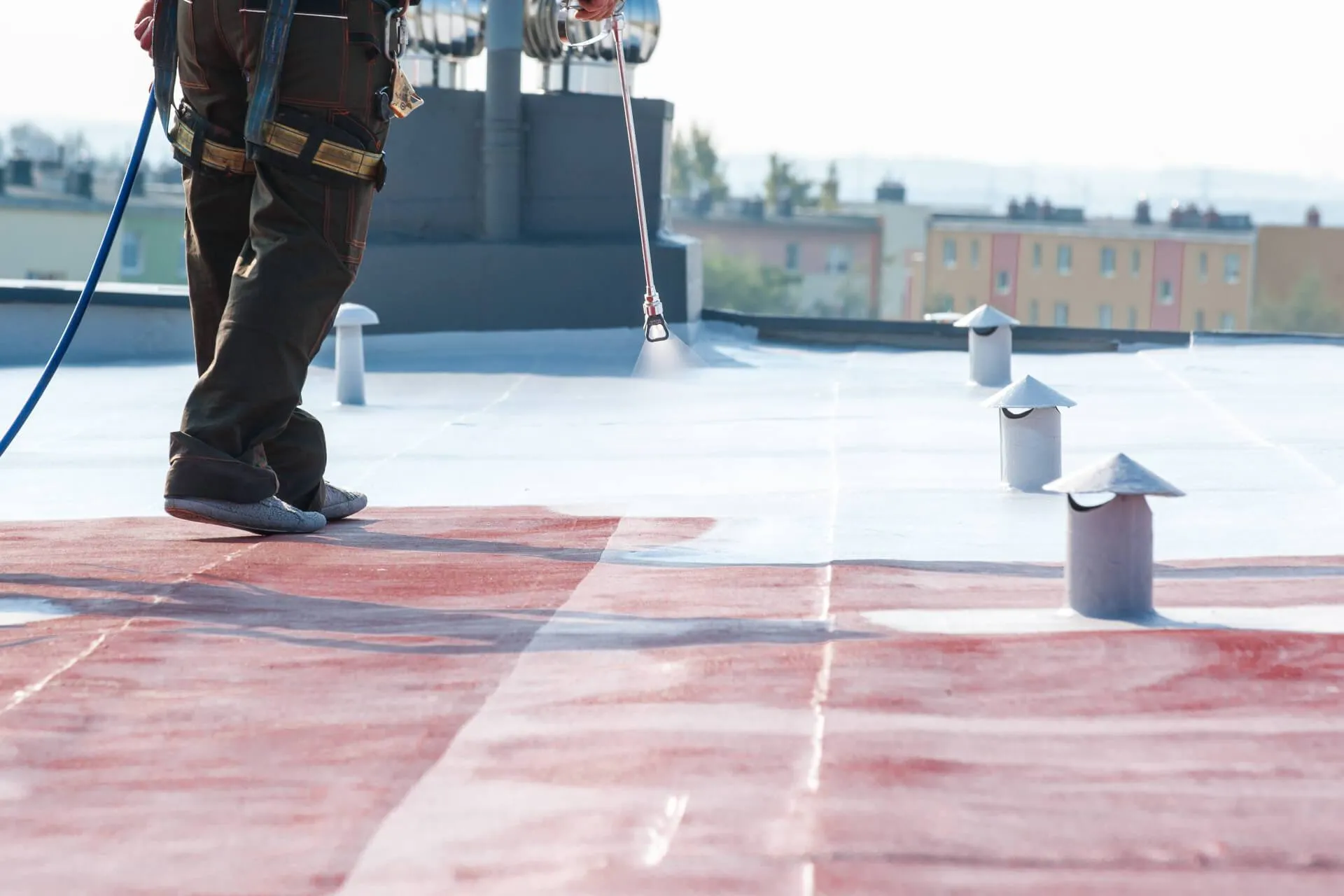
Refurbishment is for a roof that is tired across the whole surface, not one with a single fault. The signs are usually cumulative: the covering has gone brittle, blistered or crazed over most of the roof; you have patched the same roof more than once and the repairs keep moving; water sits and drains slowly after rain; moss and growth have taken hold. On their own, each of these is a maintenance job. Together they say the surface has reached the end of its service life and the whole roof needs renewing, not another patch.
The point many building owners miss is that reaching this stage does not automatically mean a full re-roof. A worn surface over a sound structure is exactly the roof that refurbishment is built for.
Refurbish or replace? What actually decides it
The deciding factor is not the surface you can see, it is the deck underneath. If the deck is solid and dry and only the covering is worn, the roof is a strong candidate for refurbishment: the existing covering is prepared and sealed over, and the roof stays in place. If the deck is wet, rotten or structurally failing, sealing over it would only trap the problem, and a full replacement is the right answer.
That is why refurbishment starts with a survey rather than a quote. An Approved Contractor checks the structure, the falls and the drainage before recommending anything, so you find out which situation your roof is actually in. Where the structure is sound, refurbishment usually costs considerably less than a full re-roof and is far less disruptive, because there is no strip-off, no skips and no days with the building open to the weather. Our guide to flat roof refurbishment cost sets out what drives the price.
What a flat roof refurbishment involves
A refurbishment is carried out over the existing roof, in a few stages. The roof is surveyed, then cleaned and prepared, and any local defects are made good. A primer matched to the substrate is applied, then the liquid waterproofing with mesh reinforcement, worked into the laps, upstands and details where flat roofs usually fail first. The exact preparation is matched to the covering, so a worn asphalt flat roof overlay is made good differently from felt or single-ply. It cures into one continuous, seamless surface across the whole roof.
For the building, this means the work is contained: the covering is not torn off, so there are no skips and no exposed deck, the building stays in use throughout, and a typical refurbishment is a matter of days rather than weeks. The system is cold-applied, with no torches or hot works on the roof.
The HYDRONYLON system
The system fitted on these refurbishments is HYDRONYLON, assessed under European Technical Assessment ETA-23/0735. HYDRONYLON LTD supplies it; the work is carried out by Approved Contractors, trained and certified on the system and working across London. A roof refurbished by an Approved Contractor carries a 10-year product guarantee on the materials, issued to the contractor who does the work. You can see the build-up for each roof type on the applications page and the method step by step on the system page.
Refurbishment projects in London
Worn London roofs renewed with the HYDRONYLON liquid-applied system rather than stripped off and replaced.
-
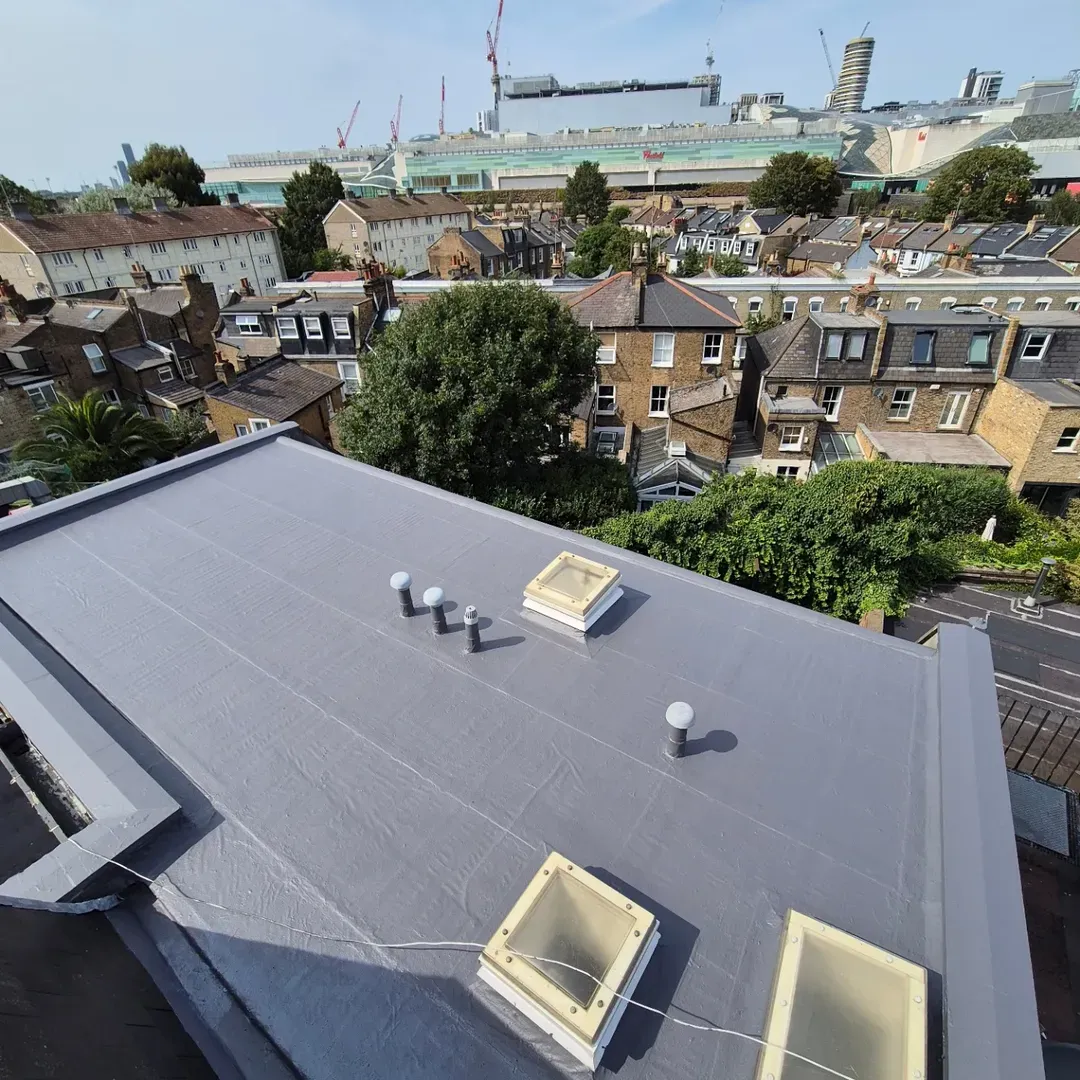 Leaking felt roof sealed in Shepherd's Bush, London W12 Felt · 65 m² · 6 August 2025 A worn felt flat roof in Shepherd's Bush, London W12: all 65 m² sealed with the HYDRONYLON liquid-applied system in four working days, no strip-off. Read case study →
 -
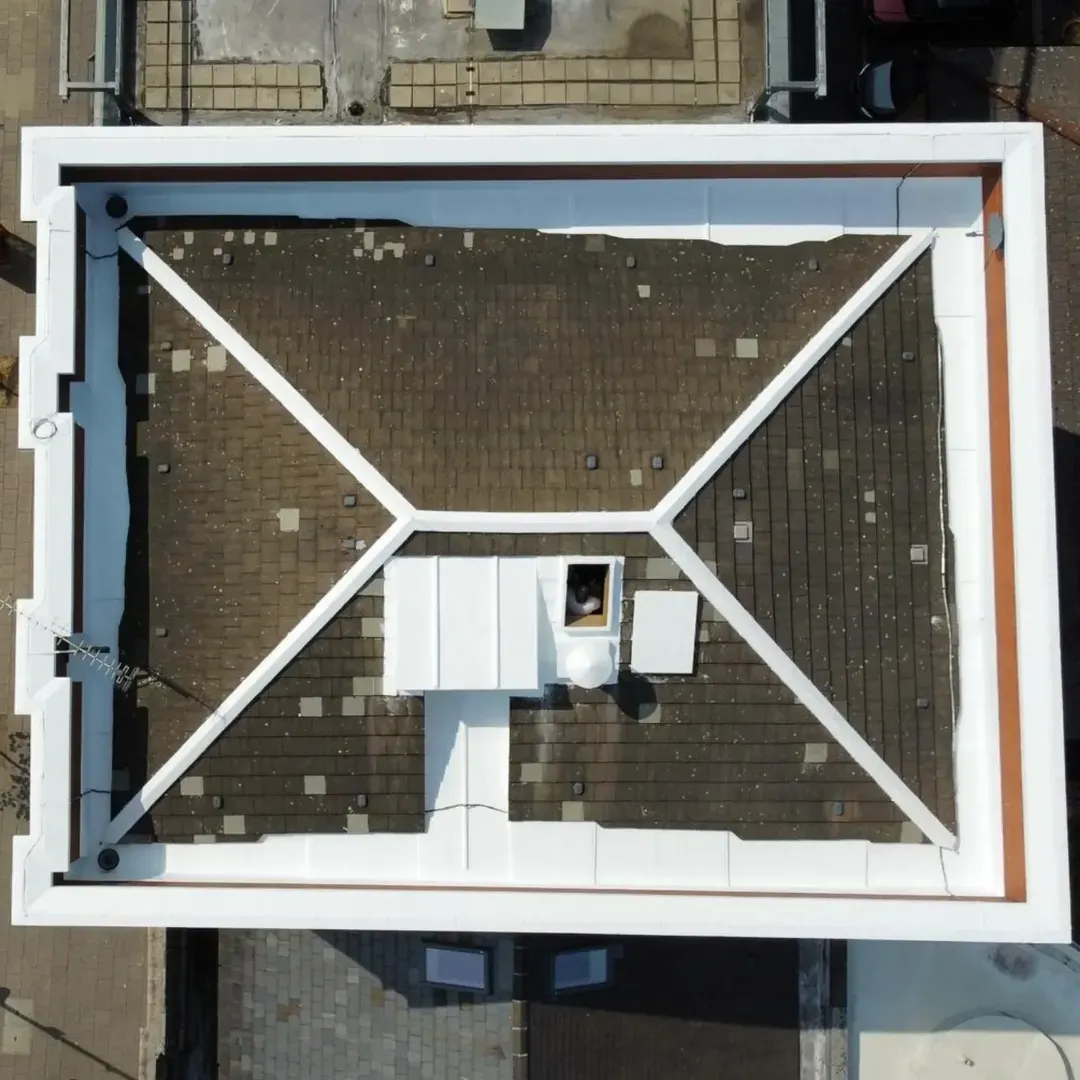 Leaking lead and parapet roof sealed in Whitechapel, London E1 Lead & parapet · 78 m² · 18 August 2024 A leaking lead parapet roof on Whitechapel Road, London E1, sealed with the HYDRONYLON liquid-applied system, with no lead replacement or tear-off. Read case study →
Get a free roof assessment
Leave your details and, if you like, a few photos of your roof. We will get back to you with an assessment. No obligation.
Thank you - we'll be in touch within one working day.
Frequently asked questions
Can my flat roof be refurbished, or does it need replacing?
It depends on the deck beneath the covering. If the deck is sound and dry and only the surface is worn, the roof can usually be refurbished and sealed over rather than replaced. If the deck is wet, rotten or structurally failing, a replacement is the better route. A survey by an Approved Contractor establishes which case your roof is in before any work is quoted.
How long does a flat roof refurbishment take?
Most refurbishments are a matter of days rather than weeks. Because the existing covering is not stripped off, there is no tear-off and no exposed deck, so the building stays in use while the work is carried out. The exact time depends on the size and condition of the roof.
Is refurbishing a flat roof cheaper than replacing it?
Where the structure is sound, refurbishment usually costs considerably less than a full re-roof, because it avoids the largest costs of replacement: stripping the old roof off, removing the waste, and rebuilding the deck. Cost then depends on the size and condition of your roof. Where the deck itself has failed, replacement may be unavoidable, which a survey will confirm.
What types of flat roof can be refurbished?
Worn felt, asphalt, single-ply and metal flat roofs can all be refurbished with a liquid-applied system, provided the structure beneath is sound. The existing covering is prepared and sealed over rather than removed, and the system is built up to suit each surface.
Do I have to move out during a flat roof refurbishment?
No. A refurbishment is carried out over the existing roof, so the building is not opened up and stays in use throughout. The system is cold-applied, with no torches or hot works on the roof, which keeps disruption to a minimum.